Sri Lanka beat England by two wickets in Rawalpindi on 22 October 2026, chasing 430 with one ball left. England made 429 for 4 around Harry Brook's 202. Pavan Rathnayake (130) and Dasun Shanaka (97 off 50) kept the rate in reach, and Janith Liyanage hit the winning six. It is the second-highest successful chase in ODI history.
Key takeaways
- Sri Lanka made 430 for 8 in 49.5 overs to beat England, who had scored 429 for 4, by two wickets in Rawalpindi on 22 October 2026.
- Harry Brook's 202 off 116 balls included the fastest double century in ODI history, reached in 114 balls, and England's first in men's ODIs.
- Pavan Rathnayake was Player of the Match for 130 off 106 balls, sharing stands of 166 with Avishka Fernando and 133 with Dasun Shanaka.
- Sri Lanka's 430 is the second-highest successful chase in ODI history and the 859-run aggregate is the second highest in any ODI, as at 24 October 2026.
- Sam Curran's 2 for 103 from nine overs are now the most expensive figures by an England bowler in an ODI.
England made 429 for 4 in Rawalpindi on Thursday 22 October, built around Harry Brook's 202, and lost. Sri Lanka chased it down with one ball to spare, winning by two wickets in the third match of the Pakistan ODI Tri-Series.
The scorecard reads like a contest between two batting line-ups, and mostly it was. But the result turned on a few specific passages: a third-wicket stand that kept the chase alive, two reviews that kept Dasun Shanaka in, and a last over that swung three times in five balls. This post goes through them with the numbers, as at 24 October 2026.
What happened in the England v Sri Lanka match in Rawalpindi?
Sri Lanka won the toss and chose to field. England batted through their 50 overs and lost only four wickets. Sri Lanka then made 430 for 8 in 49.5 overs. Pavan Rathnayake was Player of the Match for 130 off 106 balls, which ESPNcricinfo's match report lists as his highest international score.
| England | Sri Lanka | |
|---|---|---|
| Total | 429/4 (50 overs) | 430/8 (49.5 overs) |
| Run rate | 8.58 | 8.62 |
| Top score | Harry Brook 202 (116 balls) | Pavan Rathnayake 130 (106) |
| Fours / sixes | 48 / 13 | 45 / 17 |
| Runs from boundaries | 270 | 282 |
| Best bowling against them | Dunith Wellalage 2/56 | Josh Tongue 3/79 |
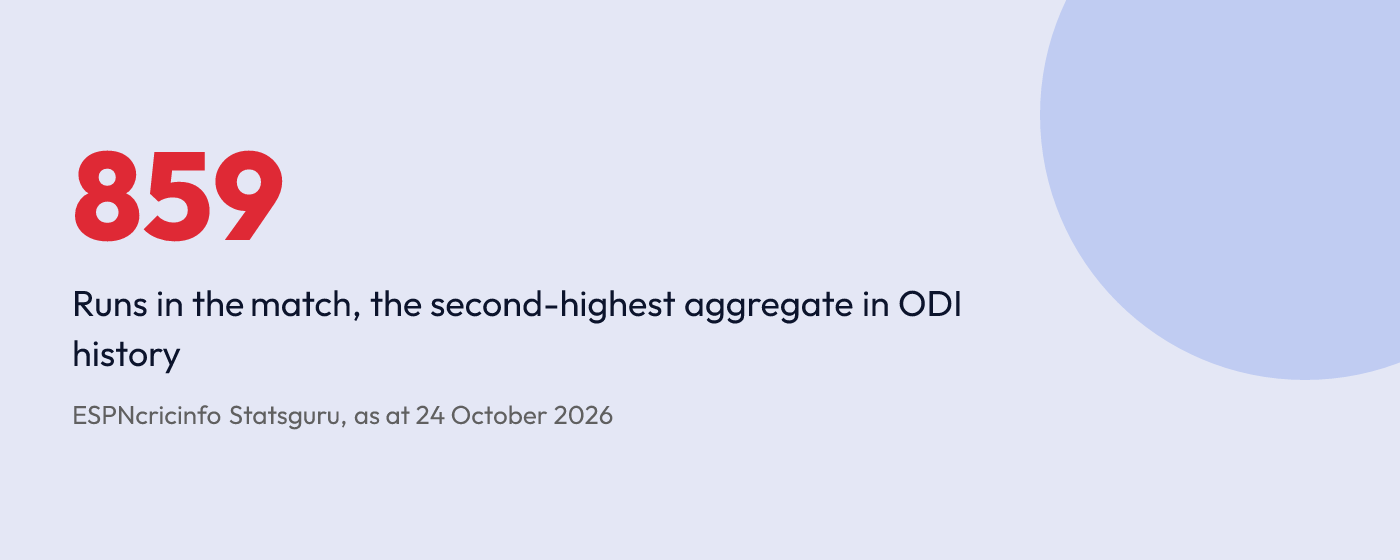
The boundary counts are added up from the ESPNcricinfo scorecard. Sri Lanka hit four more sixes than England, and those 24 extra runs from sixes are wider than the one-run margin between the totals. The match aggregate of 859 is the second highest in ODI history, according to ESPNcricinfo's Statsguru.
How did England get to 429?
England's innings came in three distinct parts. The openers, Tom Banton (50 off 51) and Ben Duckett (29 off 39), put on 74 before both fell inside three overs, leaving England 85 for 2 in the 16th over. Wellalage took both wickets.
Joe Root and Brook then added 159 for the third wicket. Root made 69 off 66. That stand took England to 244 for 3 by the first ball of the 38th over, a solid platform rather than an extraordinary one. Then the innings changed speed.
| Wicket | Partnership | Runs | Overs | Runs per over |
|---|---|---|---|---|
| 1st | Banton, Duckett | 74 | 13.2 | 5.6 |
| 2nd | Duckett, Root | 11 | 2.4 | 4.1 |
| 3rd | Root, Brook | 159 | 21.1 | 7.5 |
| 4th | Brook, Jacks | 185 | 12.5 | 14.4 |
Figures derived from the fall of wickets on the ESPNcricinfo scorecard.
Brook and Will Jacks added 185 in the last 77 balls. Jacks made 66 not out off 30. Brook was out caught off Janith Liyanage on the final ball of the innings. According to Outlook India's account, Brook reached 50 off 42 balls, 100 off 75 and 200 off 114, so his second hundred took 39 balls.
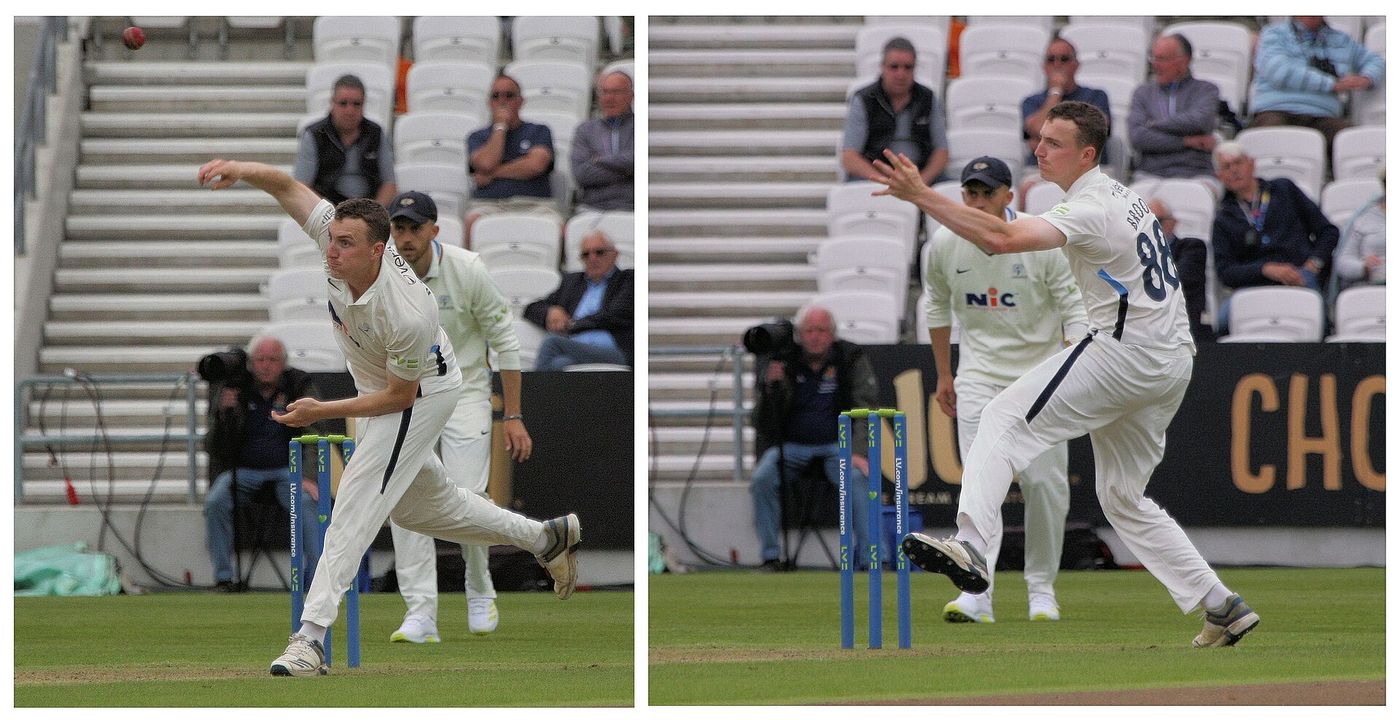
That 114-ball double century is the fastest in ODI history. It beat the 117-ball mark Shubman Gill set against West Indies in Guwahati only weeks earlier. It was also England's first double century in men's ODIs. ESPNcricinfo noted that Brook became the first batter to score an ODI double hundred and finish on the losing side.
Where did Sri Lanka's chase actually turn?
The chase began badly. Kamindu Mendis was bowled by Tongue for 18, and captain Kusal Mendis was run out without facing a ball. Sri Lanka were 24 for 2 in the fifth over, needing 406 more.
The table below tracks the required rate at each wicket, worked out from the fall of wickets. It shows how Sri Lanka stayed close enough for the finish to matter.
| After wicket | Score | Overs | Needed | Balls left | Required rate |
|---|---|---|---|---|---|
| 2nd | 24/2 | 4.2 | 406 | 274 | 8.9 |
| 3rd | 190/3 | 27.1 | 240 | 137 | 10.5 |
| 4th | 323/4 | 40.2 | 107 | 58 | 11.1 |
| 5th | 363/5 | 43.6 | 67 | 36 | 11.2 |
| 6th | 406/6 | 46.6 | 24 | 18 | 8.0 |
Avishka Fernando (97 off 83) and Rathnayake added 166 for the third wicket at 7.3 an over. That is below the rate the chase eventually needed, and at 190 for 3 Sri Lanka still wanted 10.5 an over. What the stand bought was wickets in hand. With seven wickets left and 23 overs to go, a heavy acceleration was still realistic.
The rate barely moved after that, and that matters. From the 28th over to the end of the 44th, Sri Lanka kept the requirement between 10.5 and 11.2 an over, through two more wickets. Only in the last 18 balls did it finally drop.
How much did Dasun Shanaka's 97 change the match?
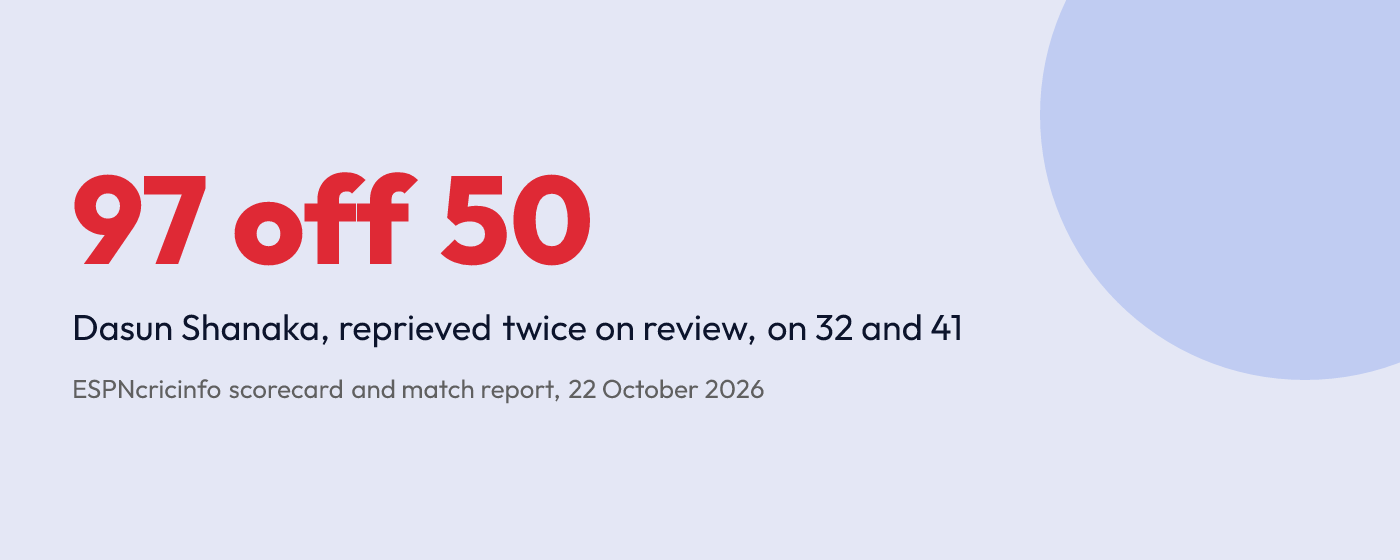
Shanaka arrived at 190 for 3 and made 97 off 50 balls with eight sixes. He and Rathnayake added 133 for the fourth wicket in 13.1 overs, about 10.1 an over, which kept the asking rate flat when it could easily have climbed.
He very nearly did not get that far. The ESPNcricinfo match report records that Shanaka was given out caught behind on 32 and lbw on 41, and had both decisions overturned on review. He added another 56 runs after the second reprieve.
- On 32: given out caught behind, overturned on review.
- On 41: given out lbw, overturned on review.
- On 97: caught by Banton in the deep, trying to hit Liam Dawson's last ball for six.
There is an irony in the bowling figures too. Shanaka's own six overs cost 74 runs, at 12.3 an over the most expensive rate of any Sri Lanka bowler, and his batting then gave all of it back and more.
How did the final over play out?
Liyanage came in at 363 for 5 with 67 needed off 36 balls and finished on 61 not out off 27. Sri Lanka needed eight off the final over, bowled by Tongue. The fall of wickets and the match report give this sequence:
- 49.1: Liyanage takes a single. Seven needed off five.
- 49.2: Wellalage is bowled. Seven needed off four.
- 49.3: Eshan Malinga, the No. 9, is bowled first ball by a yorker. Seven needed off three.
- 49.4: Asitha Fernando takes a single to third man. Liyanage is back on strike, six needed off two.
- 49.5: Liyanage hits a slower ball over long-off for six. Sri Lanka win.
Tongue took two wickets in two balls and finished with 3 for 79, England's best figures of the day. The over came down to whether the No. 10 could get Liyanage back on strike, and he did. The same Liyanage had dismissed Brook with the last ball of England's innings.
Did England's bowling plan cost them the match?
England went in without Adil Rashid, bringing in Dawson, and with Tongue for Sonny Baker, according to ESPNcricinfo. Their spin came from Dawson (10 overs for 71) and Jacks (5 for 41). Brook's post-match comment, quoted in the same report, was that England "couldn't quite hit our straps with the ball".
| Bowler | Overs | Runs | Wickets | Economy |
|---|---|---|---|---|
| Gus Atkinson | 7 | 57 | 0 | 8.1 |
| Josh Tongue | 8.5 | 79 | 3 | 8.9 |
| Jamie Overton | 10 | 77 | 1 | 7.7 |
| Liam Dawson | 10 | 71 | 1 | 7.1 |
| Sam Curran | 9 | 103 | 2 | 11.4 |
| Will Jacks | 5 | 41 | 0 | 8.2 |
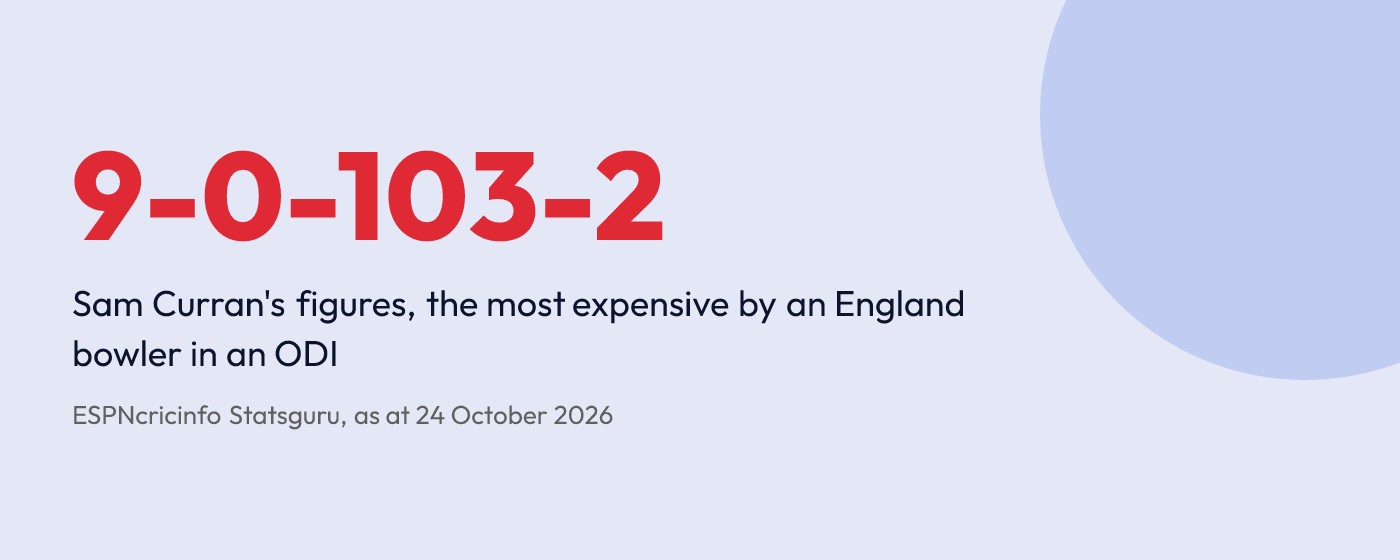
The spell that stands out is Sam Curran's. His 9 overs for 103 are now the most expensive figures by an England bowler in an ODI, ahead of his own 98 against West Indies in North Sound in December 2023, according to Statsguru. The match report says he struggled to grip the ball in the dew under lights.
For contrast, Wellalage's 10 overs for 56, at 5.6 an over, were the most economical spell by any bowler in the match.
Where does 430 rank among ODI run chases?
Statsguru lists Sri Lanka's 430 for 8 as the second highest successful chase in ODI history, as at 24 October 2026. Only South Africa's 438 for 9 against Australia in Johannesburg in March 2006 is higher, and that match also holds the aggregate record of 872. The table is ordered by the chasing side's score, from Statsguru.
| Rank | Team | Score | Opposition | Ground | Date |
|---|---|---|---|---|---|
| 1 | South Africa | 438/9 | Australia | Johannesburg | 12 Mar 2006 |
| 2 | Sri Lanka | 430/8 | England | Rawalpindi | 22 Oct 2026 |
| 3 | India | 406/2 | West Indies | Guwahati | 30 Sep 2026 |
| 4 | Netherlands | 374/6 | Scotland | Dundee | 12 Jun 2025 |
| 5 | South Africa | 372/6 | Australia | Durban | 5 Oct 2016 |
Two of the three biggest successful chases, and two of the four highest match aggregates, have now come in the space of a month. Guwahati (811) and Rawalpindi (859) are both 2026 matches. Two matches are not a trend on their own, but captains setting targets this autumn have reason to treat 400 as something less than safe.
The tri-series continues, and fixtures and live scorecards are on the schedule and live scores pages. The wider picture of who is playing whom is on the series page.
Frequently asked questions
Sri Lanka won by two wickets with one ball remaining. England batted first after losing the toss and made 429 for 4, with Harry Brook scoring 202. Sri Lanka replied with 430 for 8 in 49.5 overs. Pavan Rathnayake was Player of the Match for 130, and Janith Liyanage finished the chase with a six off Josh Tongue.
South Africa's 438 for 9 against Australia in Johannesburg on 12 March 2006 is the highest successful chase in ODI cricket, according to ESPNcricinfo's Statsguru as at 24 October 2026. Sri Lanka's 430 for 8 against England in Rawalpindi on 22 October 2026 is second, and India's 406 for 2 against West Indies in Guwahati in September 2026 is third.
Harry Brook holds the record. He reached 200 off 114 balls against Sri Lanka in Rawalpindi on 22 October 2026, beating Shubman Gill's 117-ball double century against West Indies in Guwahati weeks earlier. Brook was out for 202 off 116 balls on the last ball of the innings. It was the first double century by an England batter in men's ODIs.
Sri Lanka needed eight off the last over from Josh Tongue. Janith Liyanage took a single, then Tongue bowled Dunith Wellalage and Eshan Malinga with consecutive balls, leaving seven needed off three. Asitha Fernando took a single to put Liyanage back on strike, and Liyanage hit the fifth ball over long-off for six to win with one ball to spare.
Sam Curran's 2 for 103 from nine overs against Sri Lanka in Rawalpindi on 22 October 2026 are the most runs conceded by an England bowler in an ODI innings, according to ESPNcricinfo's Statsguru. The previous record was also his: 0 for 98 from 9.5 overs against West Indies in North Sound in December 2023.
Sources
- England vs Sri Lanka, 3rd Match, Pakistan ODI Tri-Series 2026: full scorecard
- Sri Lanka batters chase down 430 to trump Brook's double-ton
- Statsguru: highest successful run chases in ODIs
- Statsguru: highest match aggregates in ODIs
- Statsguru: most runs conceded in an ODI innings by England bowlers
- Harry Brook smashes record 114-ball double century as England pile up 429 against Sri Lanka
Statistics in this article were checked as at 24 October 2026.